
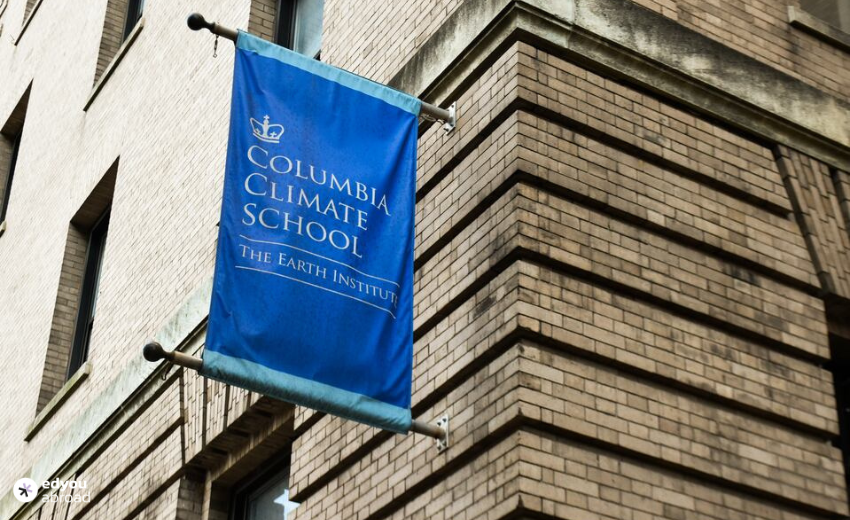
Is the Columbia Climate School really the best for Sustainability master's in 2026?
Table of contents
- Is the Columbia Climate School really the best for Sustainability master's in 2026?
- Introduction
- What is the Columbia Climate School?
- What are the top environmental programs offered by Columbia's Climate School?
- How can you apply for a master's degree at Columbia's School of the Environment?
- Curriculum of Columbia Climate School
- Which companies recruit graduates from Columbia's Climate School?
- Conclusion
-
- What can we do for you?
Introduction
In a world where the climate crisis is no longer a distant threat but a daily reality, the demand for specialized, high-level education has never been greater. At the forefront of this movement is the Columbia Climate School, the first new school at Columbia University in 25 years and the first of its kind in the nation dedicated entirely to the climate.
If you are looking for a top master’s in sustainability to pivot your career toward impact, this guide explores why a Columbia sustainability master's is the gold standard for future changemakers.
What is the Columbia Climate School?
The Columbia Climate School was established to bridge the gap between scientific research and real-world policy. It serves as a hub for the university’s vast environmental resources, including the world-renowned Lamont-Doherty Earth Observatory and the Earth Institute. Unlike traditional departments, the Columbia University Climate School is designed to be interdisciplinary, bringing together scientists, economists, and policy experts to create holistic solutions for a warming planet.
What are the top environmental programs offered by Columbia's Climate School?
The school offers a diverse portfolio of graduate degrees tailored to different sectors of the green economy. Whether you are interested in the hard science of the Columbia School of Environmental Science or the corporate side of Columbia Sustainability Management, there is a pathway for you.
MS in Climate: This is a new 2-year rigorous program focusing on scientific understanding, mitigation pathways, and justice frameworks. Along with providing core knowledge on climate science, you will get in-depth training in climate systems and analytics, climate and food systems, and disaster management.
MA in Climate and Society: An intensive 12-month program that examines the intersection of climate science and social science. This program provides a strong foundation in core climate knowledge with flexible training for professionals and academics.
MS in Climate Finance: This is a 1year specialized degree (in partnership with the Columbia Business School) for those looking to lead in ESG investing and climate risk.
MS in Sustainability Management: Offered in partnership with the School of Professional Studies, this is the premier Columbia sustainability master's for corporate and organizational leaders. The coursework provides a unique blend of management with state-of the art sustainability practices.
Columbia University does offer several dual degree programs, like -
MS in Climate and MS in Architecture & Urban Design, which is offered in collaboration with the Graduate School of Architecture, Planning, and Preservation. Once you finish, you will be awarded with both a Master’s in Climate ans MS in Architecture and Urban Design.
MS in Climate and MS in Carbon Management is offered by Columbia Climate School and Columbia Engineering, and you graduate with a dual master’s in Climate and Carbon Management training you to develop and implement low-carbon strategies across sectors and industries.
How can you apply for a master's degree at Columbia's School of the Environment?
Columbia Universityb being one of the most popular universities with an acceptance rate of around 3.9- 4.3%, many of our followers and clients ask us How can I apply for a master's degree at Columbia's School of the Environment? Applying to the Columbia School of Environment requires a strategic approach. Here is the roadmap for your application for the 2026 intake:
Academic Prerequisites: A four-year bachelor’s degree is required. While various backgrounds are accepted, some quantitative or social science training is preferred.
Transcripts & Scores: Submit unofficial transcripts from all post-secondary institutions. GRE scores are optional for most programs, but recommended if your quantitative background is light.
English Proficiency: If your degree wasn't in English, you’ll need a TOEFL (min. 100), IELTS (7.5), or Duolingo (135).
Statement of Purpose: This is your chance to detail your vision for climate action.
Deadlines: Most applications for Fall entry close around March 1st.
Curriculum of Columbia Climate School
The curriculum at the Columbia Climate School is built on a "Climate Core." This ensures every student, regardless of their specialty, understands the physical science of climate change, quantitative methods, and the ethics of climate justice.
|
Keys |
Key Topics Covered |
|
Physical Dimensions |
Earth systems, climate modeling, and ecology. |
|
Policy & Ethics |
Environmental law, climate justice, and international policy. |
|
Management |
Columbia Sustainability Management focus- ESG, supply chain, and reporting. |
|
Quantitative |
Data analytics, GIS, and environmental economics. |
Now that we have an idea of the curriculum structure, you might be interested to know the big names who love to hire from the Columbia Climate School. This is an important selection factor we agree on. Any subject with no future brings the students' future to risk, which is why we do thorough research while helping our clients get into the top schools based on their profile!

All options saturated with the declining job market? If I were you, I would do these Master's instead.
Which companies recruit graduates from Columbia's Climate School?
A degree from this prestigious institution carries immense weight in the job market. Graduates often find themselves in high-impact roles at:
|
Domains |
Companies |
|
Multinational Corporations |
Google, Nike, Patagonia, and Con Edison. |
|
Financial Institutions |
BlackRock, Goldman Sachs, and various ESG consulting firms. |
|
Non-Profit and Public Sector |
The Nature Conservancy, Clean Air Task Force, and the NJ Department of Environmental Protection. |
Now, we frequently get this question from our clients, followers, and prospects about how to know which is the best master’s in sustainability. The answer is simple-the concept is highly relevant. If you’re a working professional looking to upskill with a master’s, Oxford’s master’s in Sustainable Urban Development might be the best master's program in sustainability for you, but it won’t work if you’re a student looking to study abroad, as you won’t qualify for a student visa with a part-time program. We have discussed some of the best sustainability master's programs here. Check them out.
Choose a master’s program that aligns with your career goals and interests. For instance, if you aim to work in policy, Columbia's focus on climate justice might suit you. If you prefer corporate sustainability, programs emphasizing ESG and supply chain management could be ideal. Research and self-assessment are key.
Don't Miss it!
So it becomes difficult to compare master's degrees in sustainability management from leading institutions just based on rankings. This is where we come to the picture. We have helped several candidates get into some of the best sustainability programs across the globe, like HEC, ESSEC, and more, and you can be the next! We can help you shortlist programs based on your profile, goals, and ambition.
Conclusion
The Columbia Climate School represents more than just an academic credential; it is an entry point into a global network of professionals dedicated to saving the planet. Whether you choose the Columbia School of Environmental Science for research or the Columbia Sustainability Management track for corporate leadership, you are positioning yourself at the vanguard of the green revolution.
Confused about how to apply to these top universities for sustainability? Connect with us and let’s discuss the next steps for your career!
